
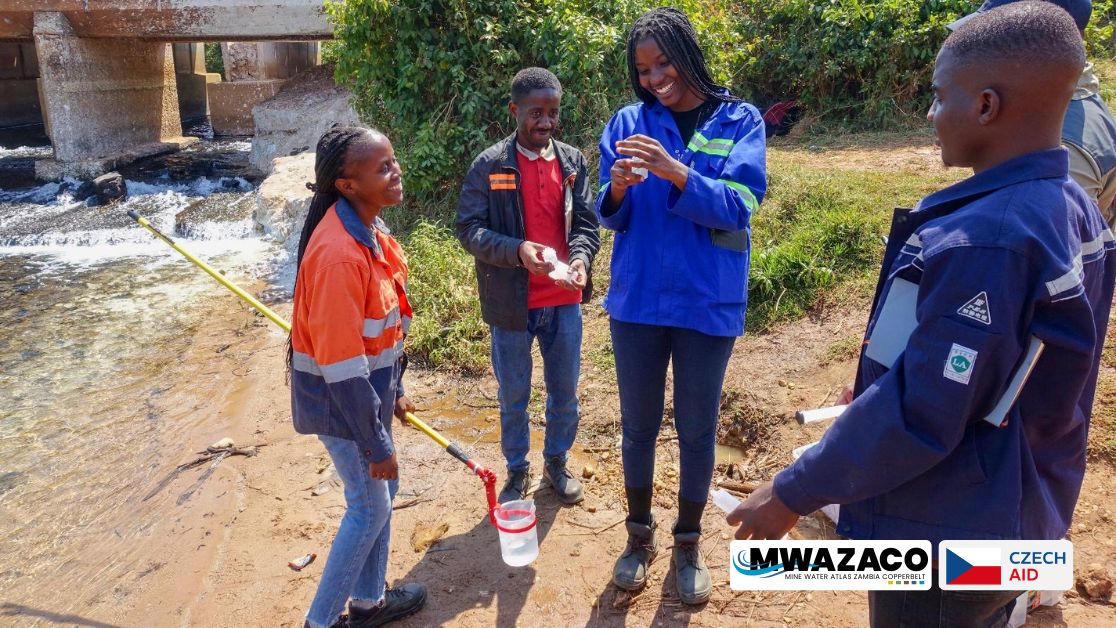
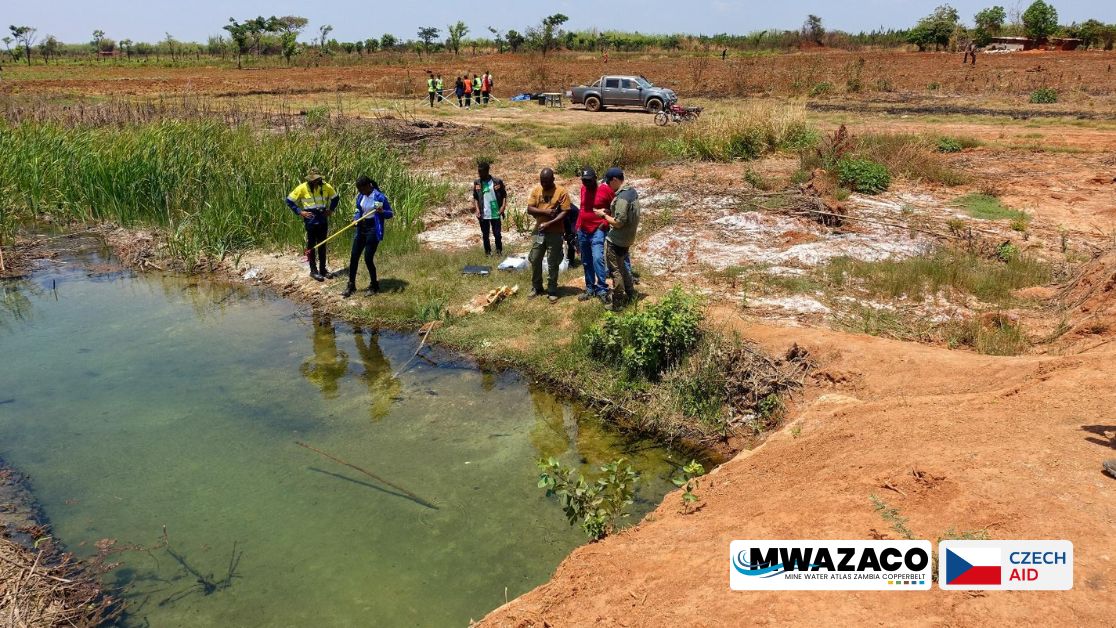
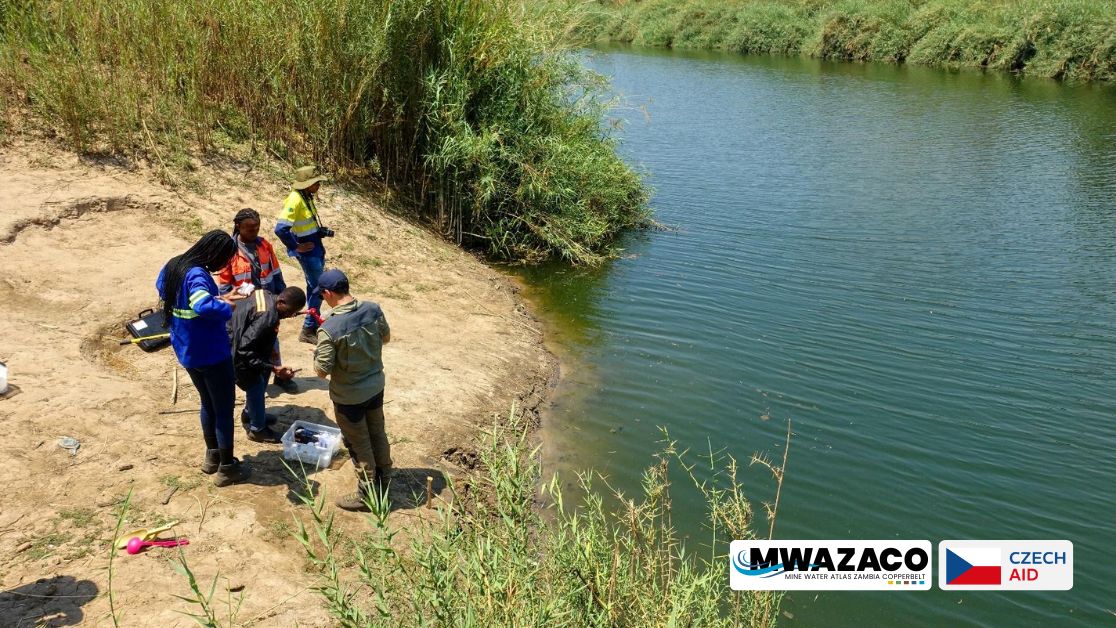
In October 2025, MWAZACO conducted its first comprehensive field campaign in Zambia’s Copperbelt Province, combining hydrochemical measurements with on-site environmental observations and community engagement.
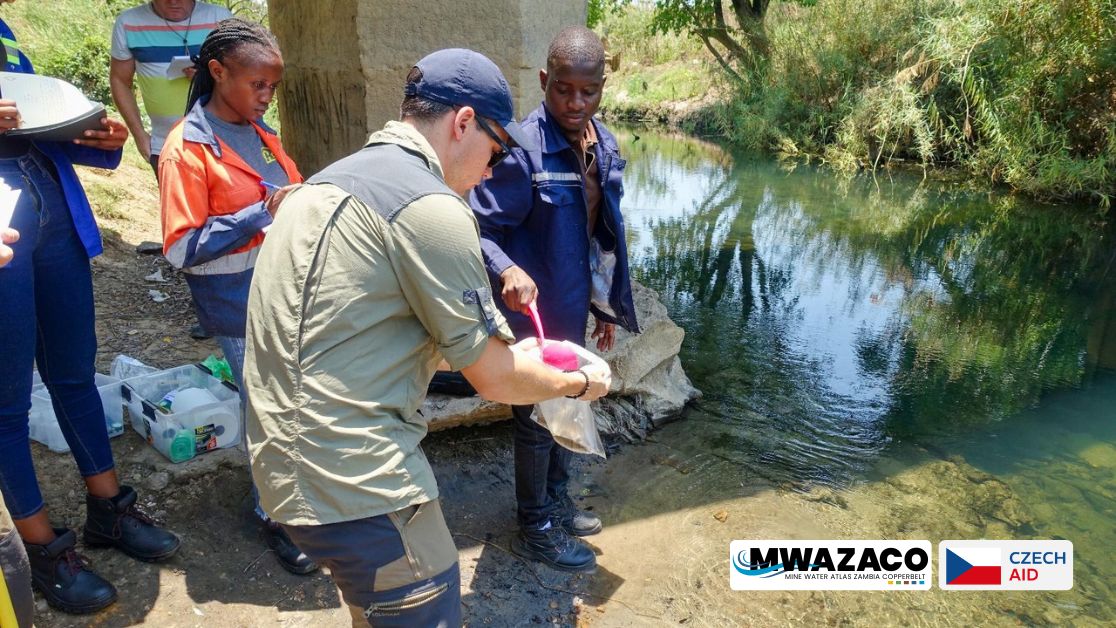
Despite temporary access limitations related to ongoing data-sharing negotiations, the project team successfully collected 17 water samples and two sediment samples from selected locations across the Mwambashi and Kafue river basins.
Measuring Water Quality on the Ground
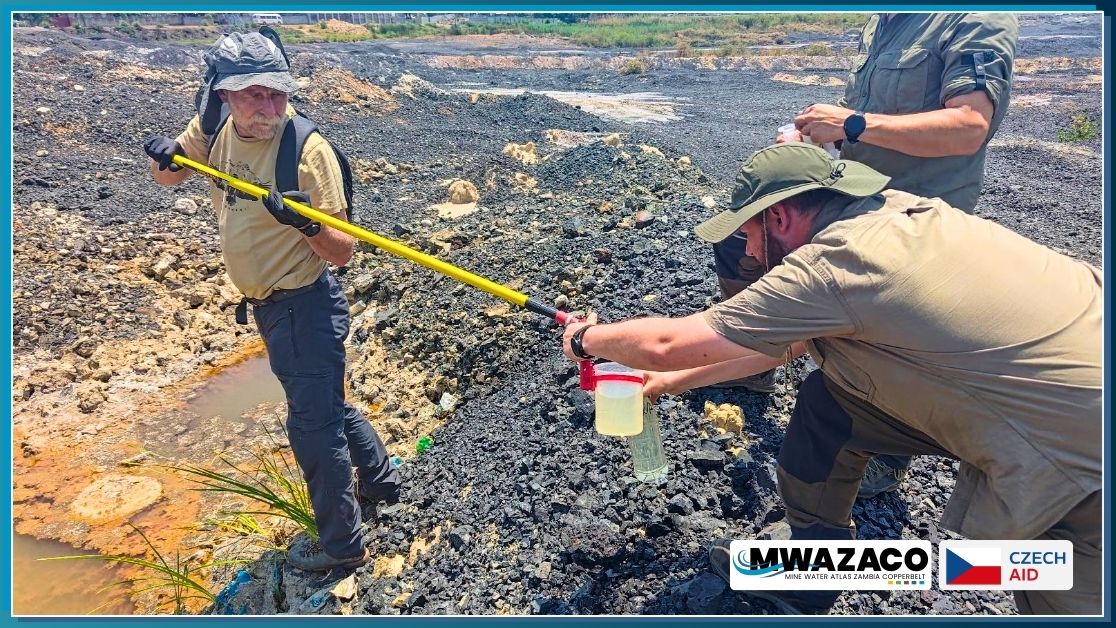
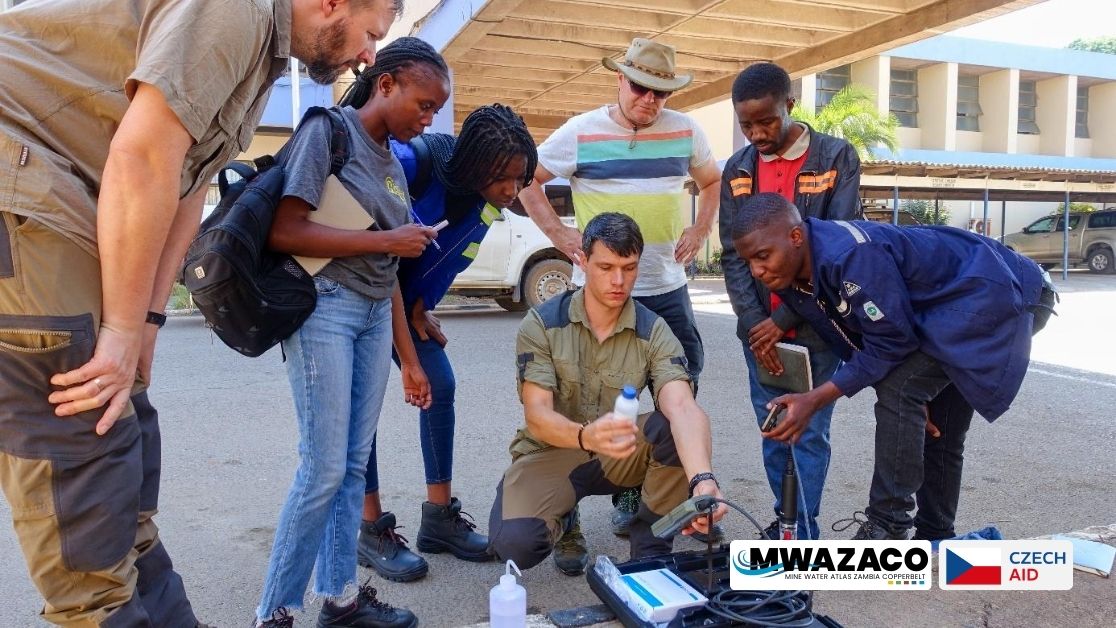
Sampling included surface watercourses used by local communities, discharge points associated with mining operations, and groundwater sources in agricultural areas. Field measurements focused on temperature, pH, electrical conductivity, and oxidation-reduction potential.
Hydrochemical evaluation revealed clear differences between natural background waters and waters influenced by mining discharge.
Naturally occurring surface waters in the region typically exhibit lower mineralisation and hydrochemical characteristics associated with Mg (Ca)-HCO₃ types. In contrast, several sampled locations displayed elevated sulphate concentrations and significantly higher mineralisation levels consistent with Ca (Mg)-SO₄ hydrochemical types.
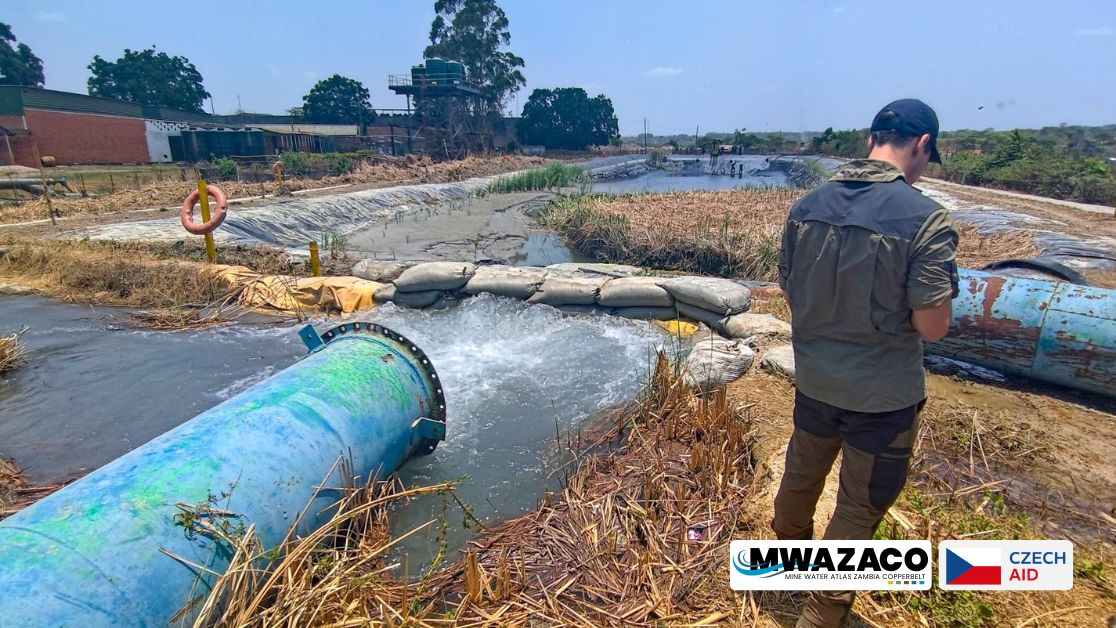
One discharge location downstream of a tailings facility showed very high total dissolved solids, exceeding 5 g/L.
Implications for Communities and Ecosystems
The results indicate that significant portions of the Mwambashi River are strongly influenced by mine water discharge before entering the Kafue River system.
Field visits also provided insight into how local communities interact with these water sources. In some areas, rivers are used for washing, irrigation, and household purposes. Understanding these patterns is essential for assessing environmental and health risks and for designing appropriate technical responses.
Moving Toward Risk Assessment and Intervention
The field data collected in 2025 will serve as the basis for more detailed risk assessments and for identifying potential locations for future pilot water treatment interventions.
This first field campaign marks an important transition from analytical preparation to on-the-ground environmental assessment, reinforcing the project’s evidence-based and locally grounded approach.
The MWAZACO project is supported by the Czech Development Agency within the Czech Development Cooperation programme. Stay connected and follow our progress as we strengthen sustainable water management in Zambia.
Napsat komentář