
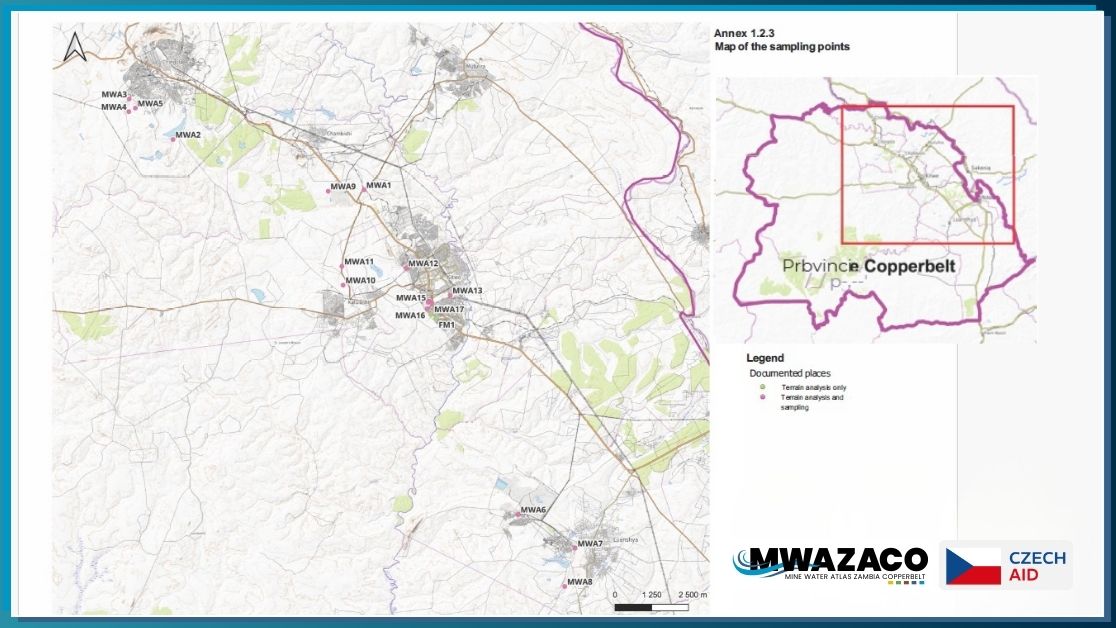
Before proposing solutions, it is essential to understand the environmental legacy of mining in the Copperbelt region. In 2025, MWAZACO began its technical work by conducting an extensive archival review of historical hydrochemical and environmental data.
The research drew primarily from long-term environmental studies previously conducted by the Czech Geological Survey in Zambia. These included projects examining the impact of copper and cobalt mining on surface water, sediments and surrounding ecosystems in the Kafue River basin.
Building a Data Baseline for Decision-Making
The archival review resulted in the compilation of preliminary structured databases. These databases include:
- Recorded locations of mine water discharge
- Available historical water quality data
- Identified communities and ecosystems potentially affected by mine-related water flows
Hydrological data from national sources were also incorporated to provide additional context.
The findings suggest that in certain areas of the Copperbelt Province, mine water discharge has had a locally significant and, in some cases, significant influence on water quality within the Kafue River basin. Both chemical composition and hydrological dynamics appear to be affected, particularly in areas influenced by deep mine dewatering.
A Foundation for the Next Phase
While access to certain operational data was limited during 2025, the archival review provided a structured environmental overview for the first time within the framework of this project. It also highlighted important data gaps that will now be addressed through newly established data-sharing agreements.
By completing this analytical baseline, MWAZACO ensured that future field surveys, risk assessments, and pilot site selection will be grounded in documented historical evidence rather than assumptions.
This step reflects a core principle of Czech-supported development cooperation: evidence-based decision-making before intervention.
The MWAZACO project is supported by the Czech Development Agency within the Czech Development Cooperation programme. Stay connected and follow our progress as we strengthen sustainable water management in Zambia.
Leave a Reply