
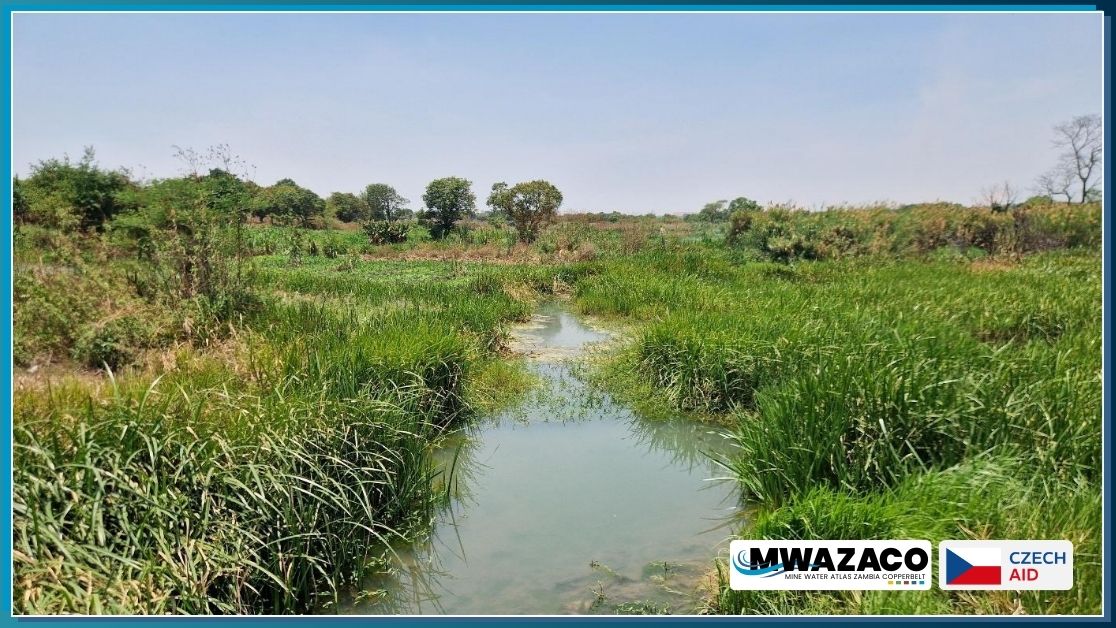
In parallel with site prioritisation, MWAZACO conducted a broader field survey in 2025 to identify potential water sources suitable for irrigation and, with treatment, possibly for drinking water supply.
The survey covered areas around Kitwe, Chingola, Luanshya and surrounding communities.
Sampling Across Diverse Water Sources
The field campaign documented a wide spectrum of water sources, including:
- Surface rivers used by local communities
- Mine discharge outlets and tailings-related flows
- Wells and groundwater in agricultural zones
- Sites considered for potential future treatment facilities
Seventeen water samples and two sediment samples were collected, with in-situ measurements of temperature, pH, electrical conductivity and redox potential.
Evaluating Water for Irrigation and Drinking Standards
Water quality was evaluated against internationally recognised reference frameworks, including FAO guidelines for irrigation water and relevant WHO guidance for drinking water parameters.
Results demonstrated significant variability across sites.
Some groundwater sources showed relatively low mineralisation and favourable irrigation parameters. Conversely, certain discharge points exhibited elevated conductivity and increased total dissolved solids.
Importantly, sodium adsorption ratios (SAR) in many samples were found to be low to very low, indicating limited immediate risk for soil structure degradation in irrigation scenarios, though further analysis is required for long-term evaluation.
From Measurement to Management
Beyond chemical analysis, the survey included consultations with local residents to understand current water usage patterns. These interactions provide valuable context for assessing practical water needs and future intervention acceptance.
The 2025 field survey, therefore, serves two purposes: technical characterisation of water quality and contextual understanding of local dependency.
Together, these insights strengthen the project’s capacity to design water management solutions that are not only technically sound but also socially relevant.
The MWAZACO project is supported by the Czech Development Agency within the Czech Development Cooperation programme. Stay connected and follow our progress as we strengthen sustainable water management in Zambia.
Leave a Reply